Source Electrical Polish Stainless Steel Stirrer for Lab, Industry, Hospital
Find 30 Electrical Polish Stainless Steel Stirrer options from verified suppliers. Compare models like SH-II-6C and SH-2B, specifications including 100~2500 RPM speed, and certifications such as ISO and CE for lab, industry, and hospital applications.
Key considerations
Products List


Energy Saving and Environmental Protection Inline Permanent Magnetic Stirrer
$200.00 - $30000.00
MOQ: 1 Sets




Comprehensive Sourcing Guide
Strategic Sourcing Guide for Electrical Polish Stainless Steel Stirrers
Navigating the global market for electrical polish stainless steel stirrers requires a disciplined approach that balances technical precision with supply chain reliability. These devices are critical components in laboratory, industrial, and medical settings where consistent fluid dynamics and material integrity are non-negotiable. The procurement process for such specialized equipment involves more than selecting a price point; it demands a rigorous verification of material composition, manufacturing processes, and compliance with international standards. This guide outlines the essential factors buyers must evaluate to secure high-performance units that meet specific operational requirements while mitigating supply chain risks.
Technical Specifications and Material Integrity
The core of any reliable stirrer lies in its construction materials and mechanical specifications. For applications involving beverage industries, laboratories, or hospitals, the material must be stainless steel to ensure resistance to corrosion and chemical degradation. The supplied data indicates that the primary material for these units is stainless steel, a choice that aligns with hygiene standards required in food and medical processing. Buyers should verify that the stainless steel grade meets specific industry requirements, as not all grades offer equal resistance to acidic or saline environments.
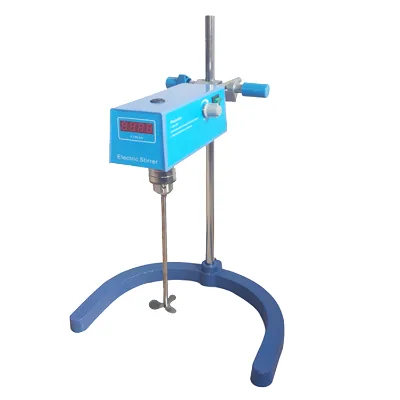
The structural design of the stirrer is equally critical. Available configurations include desktop and portable structures, catering to different workspace constraints. Desktop units are typically designed for fixed laboratory benches, offering stability for high-volume processing, while portable models facilitate mobility between different workstations or field applications. The power specifications observed in the market range from 60W to 80W, with voltage compatibility spanning 100~240V to ensure global usability. Speed control is a vital parameter, with observed operational ranges extending from 100 to 2500 RPM. This wide range allows for precise control over mixing intensity, which is essential for applications ranging from gentle blending to vigorous agitation.
The maximum volume capacity is another defining specification. Units are available with capacities up to 40L, though smaller models supporting 20L are also common. The plate size, which determines the footprint and stability of the unit, varies, with dimensions such as 200x300mm and 300x200mm being observed. Buyers must match these dimensions to their specific vessel sizes and workspace limitations. Furthermore, the surface finish is often customizable "as per drawings," allowing for specific aesthetic or functional requirements regarding surface roughness, with observed values like Ra6.3 indicating a standard industrial finish.
Manufacturing Processes and Customization Capabilities
The production method significantly influences the quality and longevity of the stirrer components. The data highlights the use of advanced manufacturing techniques, including lost wax casting and gravity casting. These processes are particularly relevant for the production of complex metal components, such as stirrer shafts or mounting brackets, ensuring high dimensional accuracy and structural integrity. The casting method, specifically directional crystallization, is noted in some specifications, suggesting a focus on optimizing the grain structure of the metal for enhanced mechanical properties.
Customization is a key differentiator in this sector. Suppliers frequently offer customization options for the product structure, packing, and specific model configurations. The observed product models, such as SH-II-6C, SH-2B, and SH-3B, indicate a modular approach where specific features can be tailored to client needs. For instance, the "Customized" attribute suggests that buyers can request modifications to the standard design, whether for specific voltage requirements, unique mounting interfaces, or specialized surface treatments. The packing options, ranging from standard export cartons to plywood crates, further demonstrate the flexibility in logistics preparation.
When evaluating customization, buyers should focus on the "as per drawings" specification. This implies that the manufacturer can produce parts based on provided technical schematics, ensuring that the final product integrates seamlessly with existing laboratory or industrial infrastructure. However, this level of customization often impacts lead times and cost structures. The observed lead time for such customized orders ranges from 40 to 50 days, a factor that must be factored into procurement planning to avoid production delays.
Compliance, Certification, and Safety Standards
In the B2B procurement of electrical equipment, compliance with international standards is not merely a formality but a prerequisite for market access and operational safety. The data confirms that many units carry ISO and CE certifications. The ISO certification, specifically ISO 9001, indicates that the manufacturer adheres to a quality management system that ensures consistent product quality. The CE marking is essential for products entering the European market, signifying conformity with health, safety, and environmental protection standards.
Additional certifications such as SGS and RoHS are also relevant, though their presence should be verified on a per-shipment basis rather than assumed for all listings. The standard AISI (American Iron and Steel Institute) is referenced in the context of material standards, which is crucial for verifying the grade of stainless steel used. Buyers must ensure that the supplier can provide valid, up-to-date certificates for these standards. It is important to note that while certifications like ISO 9001 are common, specific machining tolerances, such as +/-0.15mm, are specific attributes that should be confirmed for critical applications where precision is paramount.
Safety is further reinforced by the design of the equipment. Features such as head restraints made of stainless steel and overhead styling contribute to the ergonomic and safety profile of the unit. The voltage range of 100~240V ensures compatibility with various power grids, reducing the risk of electrical failure due to voltage mismatches. Buyers should always request proof of certification and verify that the specific model they intend to purchase is covered under the stated standards, as certifications are often model-specific.
Cost Drivers and Pricing Dynamics
The pricing for electrical polish stainless steel stirrers is influenced by a complex interplay of factors, including material costs, manufacturing complexity, and customization requirements. The observed price range is extensive, spanning from $20 to $30,000. This wide variance reflects the difference between basic laboratory models and high-end, fully customized industrial systems. The lower end of the spectrum likely corresponds to standard, off-the-shelf units with minimal customization, while the higher end encompasses complex systems with advanced features, specialized materials, and custom engineering.
Minimum Order Quantity (MOQ) is another significant cost driver. The observed MOQ range is 1 to 100 units. For small laboratories or pilot projects, an MOQ of 1 allows for immediate procurement without significant capital outlay. However, for large-scale industrial deployments, negotiating an MOQ closer to 100 can often result in more favorable unit pricing. Buyers should be aware that customization typically increases the MOQ, as the setup costs for unique production runs are amortized over a larger quantity.
Lead times also impact the total cost of ownership. The observed lead time of 40-50 days for customized orders suggests that buyers must plan well in advance. Rush orders may incur premium charges, and delays in the supply chain can disrupt production schedules. Therefore, the total cost should be calculated not just by the unit price but by including logistics, potential inventory holding costs, and the financial impact of delayed deployment.
Supplier Evaluation and Geographic Considerations
Selecting the right supplier is critical for ensuring product quality and supply chain stability. The data indicates that suppliers are located in various provinces in China, including Zhejiang, Ningbo, and Cangzhou in Hebei. These regions are known for their manufacturing capabilities, particularly in the production of stainless steel components and electrical equipment. Zhejiang and Ningbo are major hubs for export-oriented manufacturing, offering access to efficient logistics networks. Cangzhou, in Hebei, also has a strong industrial base.
When evaluating suppliers, buyers should prioritize those who demonstrate transparency in their manufacturing processes. The ability to provide detailed information about casting methods, surface roughness, and machining tolerances is a strong indicator of a competent supplier. Additionally, the availability of customization services suggests a supplier that is flexible and responsive to client needs. Buyers should verify the supplier's capacity to handle the required volume and their track record in delivering on time.
It is also essential to assess the supplier's quality control measures. The presence of certifications like ISO 9001 is a good starting point, but buyers should also inquire about their internal quality assurance protocols. This includes how they handle incoming material inspections, in-process quality checks, and final product testing. A supplier that can provide detailed test reports and maintains a robust quality management system is more likely to deliver consistent results.
Quality Control and Long-Term Procurement Strategy
Implementing a robust quality control strategy is vital for mitigating risks associated with the procurement of electrical stirrers. Buyers should establish clear acceptance criteria based on the technical specifications provided, such as material grade, surface finish, and dimensional tolerances. Regular inspections during the production process, particularly for customized orders, can help identify and rectify issues before shipment. The use of third-party inspection services can provide an additional layer of assurance, ensuring that the products meet the agreed-upon standards.
Long-term procurement considerations involve building a sustainable relationship with suppliers. This includes negotiating favorable terms for repeat orders, establishing clear communication channels, and developing a shared understanding of quality expectations. Buyers should also consider the lifecycle of the equipment, including maintenance requirements and the availability of spare parts. A supplier that offers comprehensive after-sales support and maintenance services can significantly reduce the total cost of ownership.
Furthermore, buyers should stay informed about evolving industry standards and technological advancements. The field of laboratory and industrial equipment is constantly evolving, with new materials and technologies emerging regularly. By maintaining a proactive approach to procurement, buyers can ensure that their operations remain competitive and efficient. This involves regularly reviewing supplier performance, updating procurement strategies, and investing in training for staff to ensure the optimal use of the equipment.
Conclusion
Sourcing electrical polish stainless steel stirrers requires a meticulous approach that integrates technical expertise with strategic supply chain management. By focusing on material integrity, manufacturing processes, compliance, and supplier reliability, buyers can secure high-quality equipment that meets their specific operational needs. The wide range of available models, from standard desktop units to customized industrial systems, offers flexibility for diverse applications. However, the complexity of the market necessitates a disciplined evaluation process to navigate the variations in price, lead time, and quality. Through careful planning and rigorous quality control, buyers can establish a reliable supply chain that supports their laboratory and industrial objectives effectively.
FAQs
What certifications do electrical polish stainless steel stirrers have?
These units typically carry ISO and CE certifications to ensure compliance with international safety and quality standards. Some models also include ISO 9001 and SGS verification, which confirms adherence to rigorous quality management systems for industrial and laboratory applications.
Can I customize the structure and packing of these stirrers?
Yes, customization is available for the product structure, packing, and specific model configurations. Buyers can request custom packing options like plywood crates or standard export cartons, and the surface finish can be adjusted as per technical drawings to meet specific operational needs.
Which manufacturing processes are used for these stainless steel units?
The production utilizes advanced techniques such as lost wax casting and gravity casting with directional crystallization. These methods ensure high dimensional accuracy and structural integrity, often resulting in a surface roughness of Ra6.3 or a finish as per the provided technical drawings.
How long is the lead time for customized orders?
The lead time for customized orders typically ranges from 40 to 50 days. This duration accounts for the complex manufacturing processes required for custom specifications, so buyers should plan their procurement schedules accordingly to avoid delays in deployment.
What is the maximum volume capacity for these stirrers?
The maximum volume capacity for these units can reach up to 40 liters, with smaller models supporting 20 liters. This range allows for versatile use in laboratories, hospitals, and industrial settings, accommodating various vessel sizes and mixing requirements effectively.
Where are the manufacturers of these stirrers located?
Manufacturers are primarily located in Chinese provinces such as Zhejiang, Ningbo, and Cangzhou in Hebei. These regions are established hubs for stainless steel component production and export-oriented manufacturing, offering efficient logistics networks for global distribution.